数组-链表-跳表
目录
数组
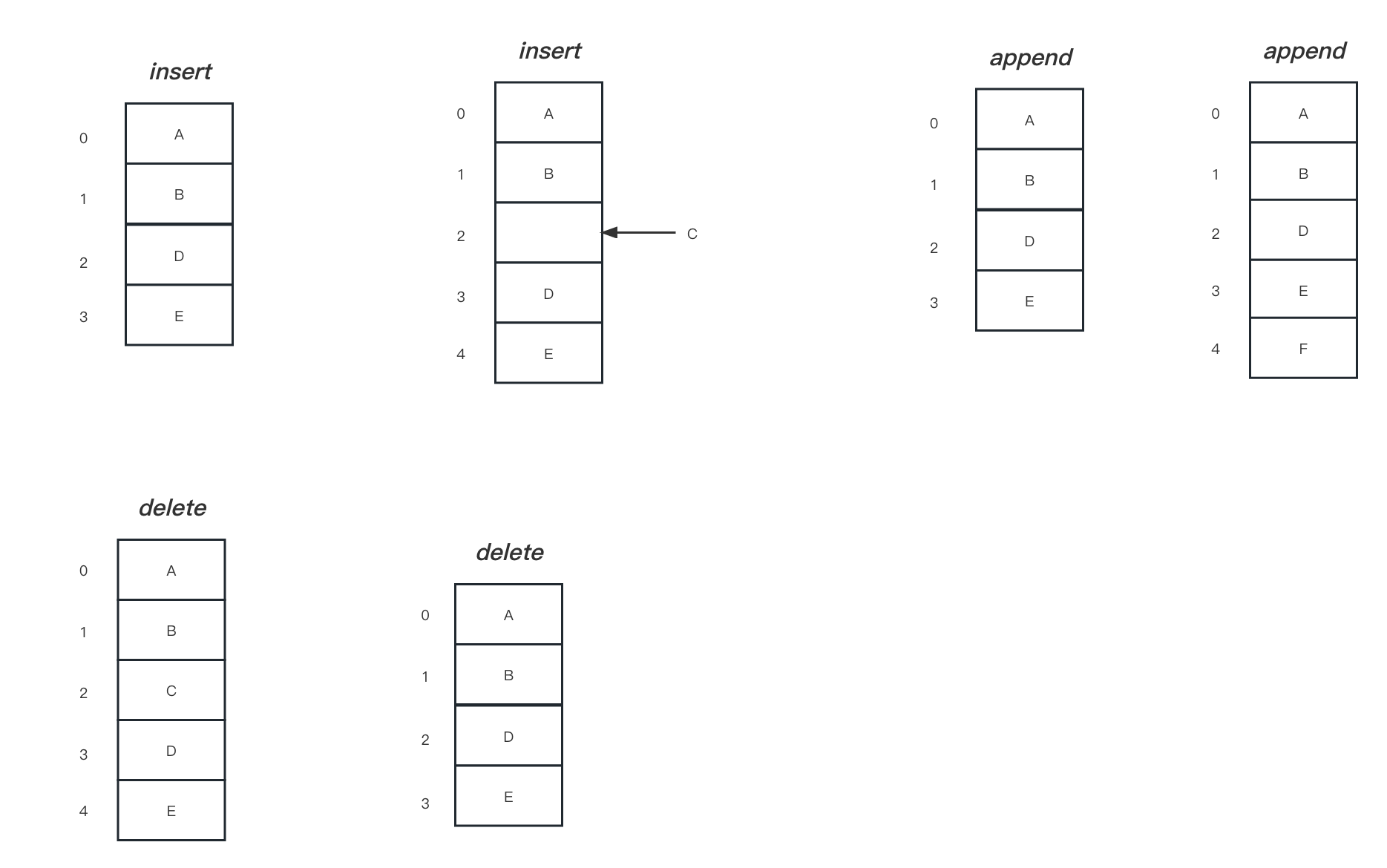
- 数组的特点
- 当我们申请数组的时候,计算机会在内存开辟一段连续的内存地址,内存管理器可以直接访问每个内存地址,所以我们可以通过" [ ] “去取值
- 数组的时间复杂度
- select: O(1)
- insert: O(n)
- append: O(1)
- delete: O(n)
- 数组时间复杂度图示
链表
-
引出
- 研究数据结构的科学家们 看到数组的 “insert” “delete” 就会去想优化这个时间复杂度 随后 链表诞生了
-
何为链表
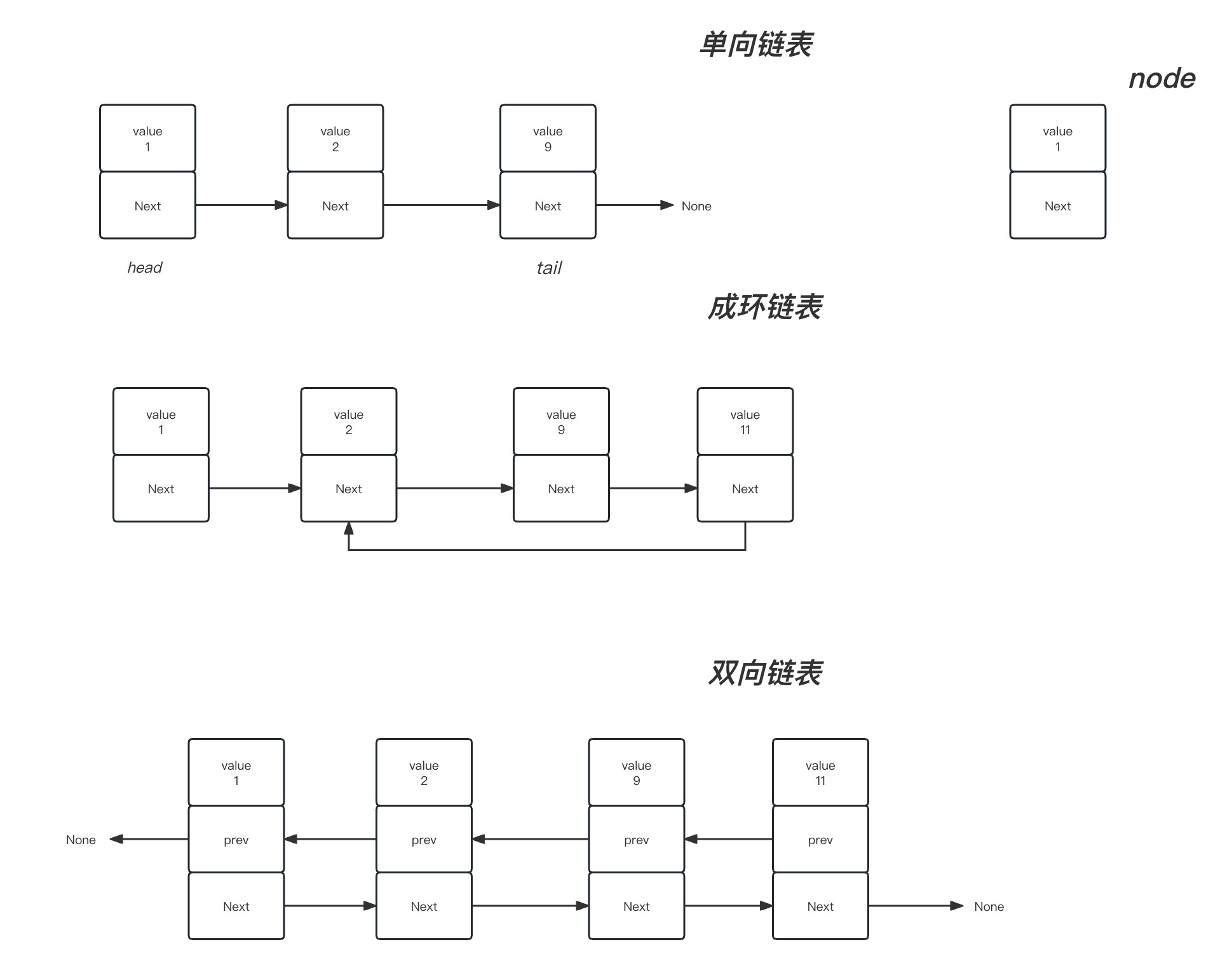
- 非连续的内存空间 有一个个的 节点(node) 组成
- node 又是由 value next 组成
- value 可以为int string 对象 … 等类型
- next 则就是一个指针 指向下一个node
-
时间复杂度
- select: O(n)
- Append: O(1)
- insert: O(1)
- delete: O(1)
-
ps: 不结合实际场景的计算时间复杂度都是耍流氓
-
图示

单向链表
-
时间复杂度
- select: O(n) 查询需要从head节点遍历 所以 O(n)
- insert: O(n) 插入需要从head节点遍历到 插入的前驱节点 所以O(n)
- delete: O(n) 删除跟插入同理
-
golang 实现单向链表
-
  1
  2
  3
  4
  5
  6
  7
  8
  9
 10
 11
 12
 13
 14
 15
 16
 17
 18
 19
 20
 21
 22
 23
 24
 25
 26
 27
 28
 29
 30
 31
 32
 33
 34
 35
 36
 37
 38
 39
 40
 41
 42
 43
 44
 45
 46
 47
 48
 49
 50
 51
 52
 53
 54
 55
 56
 57
 58
 59
 60
 61
 62
 63
 64
 65
 66
 67
 68
 69
 70
 71
 72
 73
 74
 75
 76
 77
 78
 79
 80
 81
 82
 83
 84
 85
 86
 87
 88
 89
 90
 91
 92
 93
 94
 95
 96
 97
 98
 99
100
101
102
103
104
105
106
107
108
109
110
111
112
113
114
115
116
117
118
119
120
121
122
123
124
125
126
127
128
129
130
131
132
133
134
135
136
137
138
139
140
141
142
143
144
145
146
147
148
149
150
type Object interface{} type Node struct { Data Object next *Node } type List struct { size uint64 head *Node tail *Node } func (list *List) Init() { (*list).size = 0 (*list).head = nil (*list).tail = nil } // 向链表追加节点 func (list *List) Append(node *Node) bool { if node == nil { return false } (*node).next = nil // 新加节点在末尾,没有next if (*list).size == 0 { (*list).head = node } else { oldTail := (*list).tail // 取尾结点 (*oldTail).next = node // 尾结点的next指向新加节点 } (*list).tail = node // 新节点是尾结点 (*list).size++ return true } // 向第i个节点处插入节点 func (list *List) Insert(i uint64, node *Node) bool { if node == nil || i > (*list).size || (*list).size == 0 { return false } if i == 0 { (*node).next = (*list).head (*list).head = node } else { preNode := (*list).head for j := uint64(1); j < i; j++ { preNode = (*preNode).next } (*node).next = (*preNode).next // 新节点指向旧节点原来所指的next (*preNode).next = node // 原节点的next指向新节点 } (*list).size++ return true } // 移除指定位置的节点 func (list *List) Remove(i uint64) bool { if i >= (*list).size { return false } if i == 0 { preHead := (*list).head // 取出旧的链表头 (*list).head = preHead.next // 旧链表头的next变为新的头 // 如果仅有一个节点,则头尾节点清空 if (*list).size == 1 { (*list).head = nil (*list).tail = nil } } else { preNode := (*list).head for j := uint64(1); j < i; j++ { preNode = (*preNode).next } node := (*preNode).next // 找到当前要删除的节点 (*preNode).next = node.next // 把当前要删除节点的next赋给其父节点的next,完成后代转移 // 若删除的尾部,尾部指针需要调整 if i == ((*list).size - 1) { (*list).tail = preNode } } (*list).size-- return true } // 移除所有节点 func (list *List) RemoveAll() bool { (*list).Init() return true } // 获取指定位置的节点 func (list *List) Get(i uint64) *Node { if i >= (*list).size { return nil } node := (*list).head for j := uint64(0); j < i; j++ { node = (*node).next } return node } // 搜索某个数据的节点位置 func (list *List) IndexOf(data Object) int64 { pos := int64(-1) node := (*list).head if node.Data == data { return 0 } for j := uint64(1); j < (*list).size; j++ { if node != nil { node = (*node).next if node != nil && node.Data == data { pos = int64(j) break } } } return pos } // 取得链表长度 func (list *List) GetSize() uint64 { return (*list).size } // 取得链表头 func (list *List) GetHead() *Node { return (*list).head } // 取得链表尾 func (list *List) GetTail() *Node { return (*list).tail }
-
双向链表
-
时间复杂度
- select: O(n) 查询需要从head节点遍历 所以 O(n)
- insert: O(n) 跟单项链表一样 都需要知道前驱node
- delete: O(n) 同上
- append: O(1)
-
golang 实现代码
  1
  2
  3
  4
  5
  6
  7
  8
  9
 10
 11
 12
 13
 14
 15
 16
 17
 18
 19
 20
 21
 22
 23
 24
 25
 26
 27
 28
 29
 30
 31
 32
 33
 34
 35
 36
 37
 38
 39
 40
 41
 42
 43
 44
 45
 46
 47
 48
 49
 50
 51
 52
 53
 54
 55
 56
 57
 58
 59
 60
 61
 62
 63
 64
 65
 66
 67
 68
 69
 70
 71
 72
 73
 74
 75
 76
 77
 78
 79
 80
 81
 82
 83
 84
 85
 86
 87
 88
 89
 90
 91
 92
 93
 94
 95
 96
 97
 98
 99
100
101
102
103
104
105
106
107
108
109
110
111
112
113
114
115
116
117
118
119
120
121
122
123
124
125
// 节点数据 type DoubleObject interface{} // 双链表节点 type DoubleNode struct { Data DoubleObject Prev *DoubleNode Next *DoubleNode } // 双链表 type DoubleList struct{ mutex *sync.RWMutex Size uint Head *DoubleNode Tail *DoubleNode } // 双链表初始化 func (list *DoubleList)Init() { list.mutex = new(sync.RWMutex) list.Size = 0 list.Head = nil list.Tail = nil } // Get 获取指定位置的节点 func (list *DoubleList)Get(index uint) *DoubleNode { if list.Size == 0 || index > list.Size - 1 { return nil } if index == 0{ return list.Head } node := list.Head var i uint for i = 1; i <= index; i ++{ node = node.Next } return node } // Append 向双链表后面追加节点 func (list *DoubleList)Append(node *DoubleNode) bool { if node == nil{ return false } list.mutex.Lock() defer list.mutex.Unlock() if list.Size == 0 { list.Head = node list.Tail = node node.Next = nil node.Prev = nil } else { node.Prev = list.Tail node.Next = nil list.Tail.Next = node list.Tail = node } list.Size++ return true } // Insert 向双链表指定位置插入节点 func (list *DoubleList)Insert(index uint, node *DoubleNode) bool { if index > list.Size || node == nil{ return false } if index == list.Size{ return list.Append(node) } list.mutex.Lock() defer list.mutex.Unlock() if index == 0{ node.Next = list.Head list.Head = node list.Head.Prev = nil list.Size++ return true } nextNode := list.Get(index) node.Prev = nextNode.Prev node.Next = nextNode nextNode.Prev.Next = node nextNode.Prev = node list.Size++ return true } // Delete 删除指定位置的节点 func (list *DoubleList) Delete (index uint) bool { if index > list.Size - 1 { return false } list.mutex.Lock() defer list.mutex.Unlock() if index == 0 { if list.Size == 1{ list.Head = nil list.Tail = nil } else { list.Head.Next.Prev = nil list.Head = list.Head.Next } list.Size-- return true } if index == list.Size - 1{ list.Tail.Prev.Next = nil list.Tail = list.Tail.Prev list.Size-- return true } node := list.Get(index) node.Prev.Next = node.Next node.Next.Prev = node.Prev list.Size-- return true }
跳表
-
引出
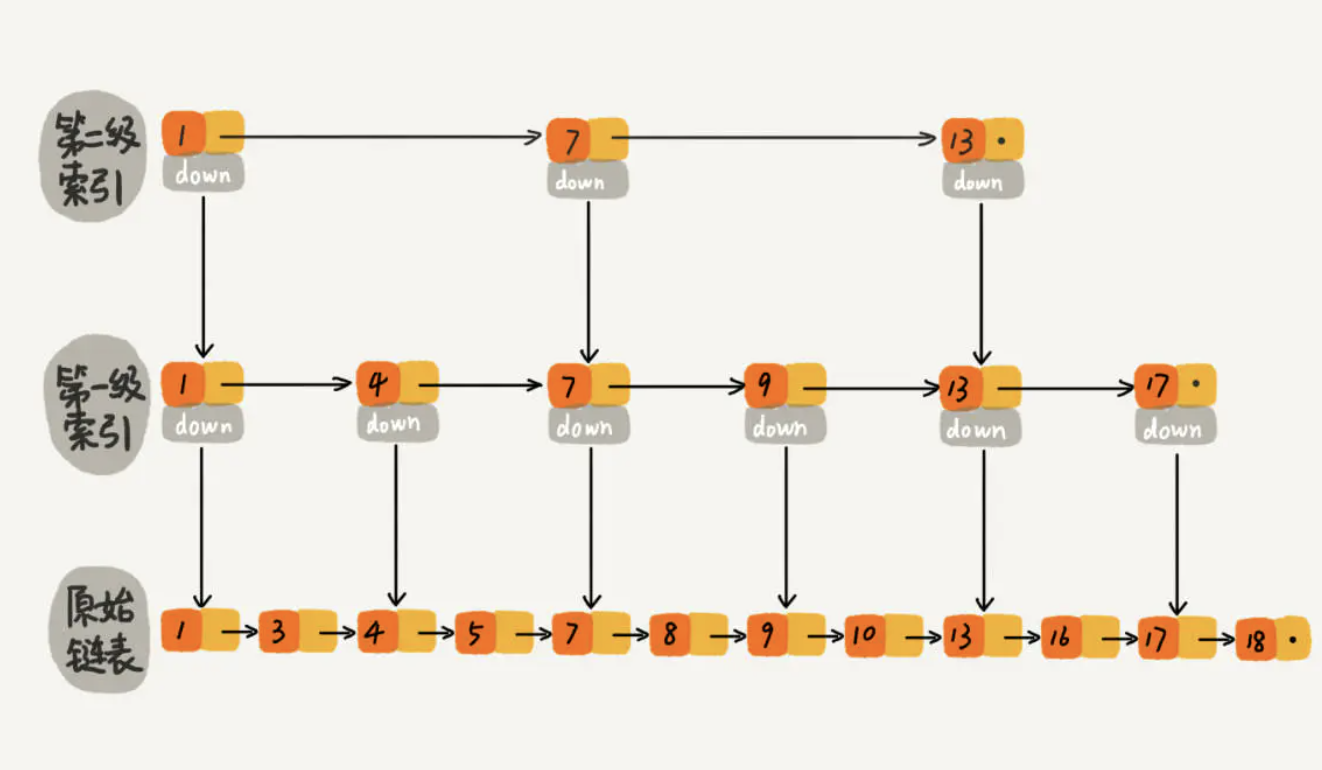
- 对于一组有序数据,我们想要在其中查找某个数,如果数据使用数组存储,显然二分法是再适合不过了,但是如果数据是用链表存储的呢?难道我们用从头遍历吗?这样时间复杂度会达到O(n)级别,相比二分法O(logn)级别简直天壤地别。那么如何提高效率呢
-
跳表
- 算法有两个很重要的思想
- 空间换时间
- 升维
- 跳表其实就是链表采用了升维的思想
- 算法有两个很重要的思想
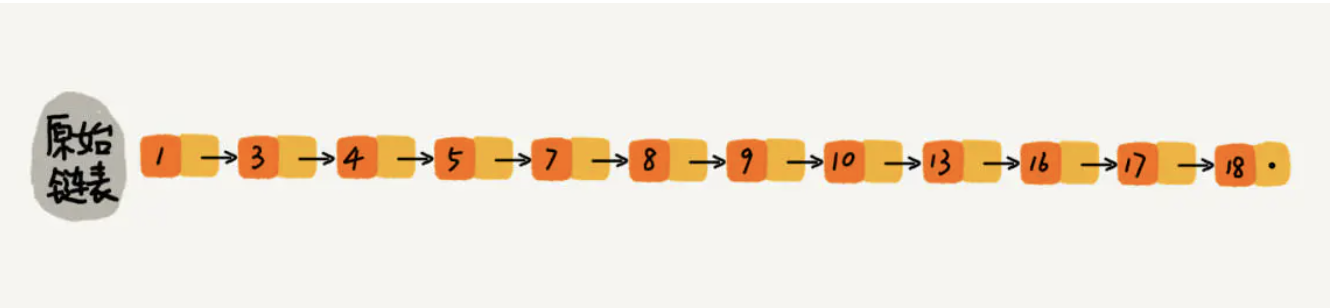
如下图,对初始链表做一层“索引”,每两个节点提取一个节点到上一层,然后用down指针连接到下一层。
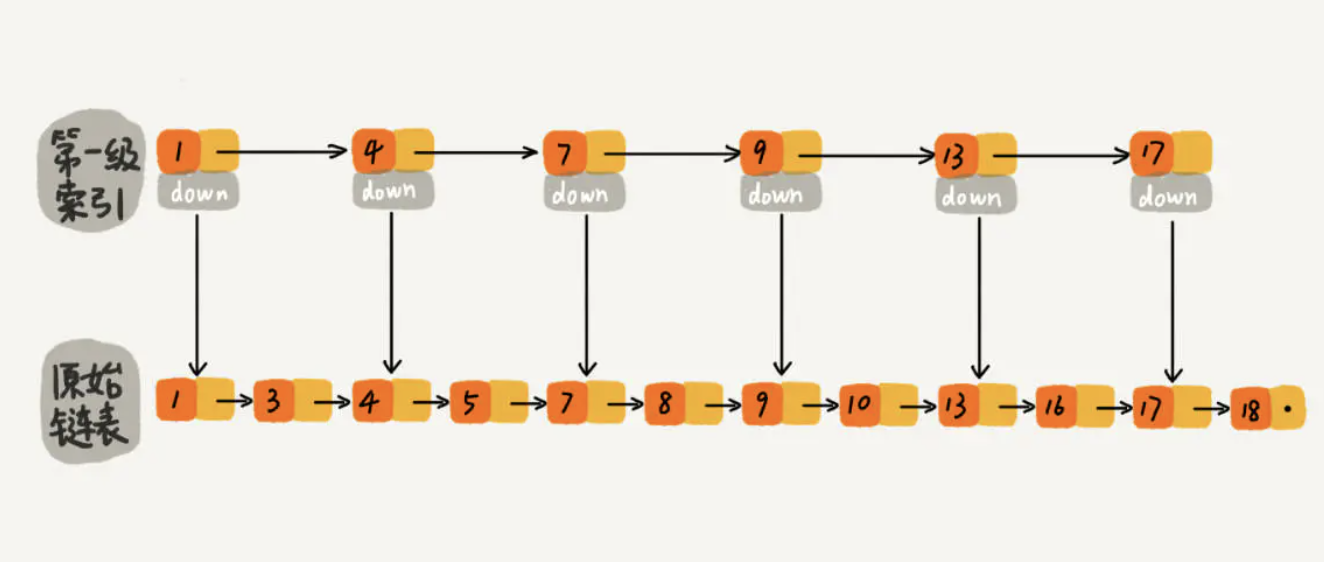 现在我们查询16这个节点。从第一级索引开始,找到13,并且下一个为17,显然16在这两个节点之间,利用down指针下降一层,这次我们遍历2次即可。利用索引后,遍历了5+2=7次,而原始链表需要10次,这里加一层索引遍历次数减少了,效率提高了一点,但还不够,我们继续往上添加索引层