PImpl
C++ PImpl
PImpl惯用法
PImpl术语,即"pointer to implementation" (指向实现的指针),由Jeff Summer最先引入。
该技巧可以避免在头文件中暴露私有细节,是促进API接口和实现保持完全分离的重要机制
PImpl并不是严格意义上的设计模式,而是桥模式的一种特例
- 在本人博客中有介绍《设计模式-桥模式》
如下图,Class A只提供公有接口Function1,Function2,其实现细节由Impl类实现,Class A通过一格Impl指针来提供服务,这样做的目的在于,使用Class A公有接口的用户,不必关系其实现细节,而且实现的变动,对用户也是透明的
-
注:- : private, + : public, # : protected

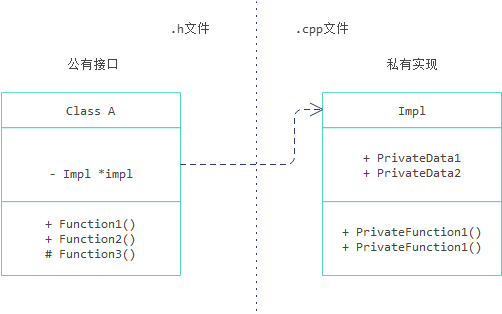
特点:该技巧在公有接口中完全隐藏内部细节。支持将私有成员数据和方法,从.h转移到.cpp文件。是构建接口和实现恰当分离的API的不可或缺的工具
使用PImpl
PImpl将类的数据成员定义为指向某个已经声明过的类型的指针,如上面的例子中的impl。这里类型仅作为名字引入,没有被完整定义,只需要前向声明即可,隐藏可以将该类型定义隐藏在.cpp文件中。该指针也称为不透明指针,因为用户无法看到所指对象细节
示例:“自动定时器(AutoTimer)API,对象被销毁时打印出生存时间”
|
|
该API的问题:暴露了定时器在不同平台上存储的底层细节,任何人都可以从头文件看到这些平台的定义
可取之处:仅将必要的方法暴露为public方法(构造函数、析构函数),其余方法、数据标记为private
由于C++语言特性,要求这些private成员都声明在公有头文件中,导致API包含平台相关#if指令。而设计者的真正目的是将所有private成员隐藏在.cpp文件中
PImpl惯用法将所有private成员放在一个class/struct中,这个类在头文件中仅做前置声明,在.cpp中定义。可以像下面这样,利用pimpl重构前面的头文件
-
autotimer.h
1 2 3 4 5 6 7 8 9 10 11#include <string> class AutoTimer // 接口类 { public: explicit AutoTimer(const std::string &name); ~AutoTimer(); private: class Impl; // 前置声明 Impl *impl; // 通过私有内嵌类, 将实现细节封装到内嵌类中 }; -
autotimer.cpp
1 2 3 4 5 6 7 8 9 10 11 12 13 14 15 16 17 18 19 20 21 22 23 24 25 26 27 28 29 30 31 32 33 34 35 36 37 38 39 40 41 42 43 44 45 46 47 48 49 50 51// autotimer.cpp #include "autotimer.h" #include <iostream> #if _WIN32 #include <windows.h> #else #include <sys/time.h> #endif class AutoTimer::Impl // 实现类 { public: double GetElapsed() const { #ifdef _WIN32 return (GetTickCount() - startTime_) / 1e3; #else struct timeval end_time; gettimeofday(&end_time, NULL); double t1 = startTime_.tv_usec / 1e6 + startTime_.tv_sec; double t2 = end_time.tv_usec / 1e6 + end_time.tv_sec; return t2 - t1; #endif } std::string name_; #ifdef _WIN32 DWORD starTime_; #else struct timeval startTime_; #endif }; AutoTimer::AutoTimer(const std::string &name) : impl_(new AutoTimer::Impl()) { impl_->name_ = name; #ifdef _WIN32 imp_->startTime_ = GetTickCount(); #else gettimeofday(&impl_->startTime, NULL); #endif } AutoTimer::~AutoTimer() { std::cout << impl_->name_ << ": took " << impl_->GetElapsed() << " secs" << std::endl; delete impl_; impl_ = NULL; }
这样,将原本暴露在原有头文件中的所有private方法和数据,转移到了.cpp文件中定义的AutoTimer::Impl类中
将Impl类(实现类)声明为AutoTimer类的private内嵌类,是为了避免与该实现相关的符号污染全局命名空间,只有AutoTimer的方法才能访问Impl成员
在Impl类中放哪些逻辑?接口类中有哪些部分,需要放到Impl类中?
通常,有以下选择
- 仅private成员变量
- private成员变量和方法
- 所有public方法。接口类中public方法只是对Impl类中等价方法进行简单包装
推荐第2项,将priavet变量和方法都放到Impl类中,这样可以保持数据和操作这些数据的方法的封装性,从而避免在public头文件中声明private方法。 不过,有2项需要注意
- 不能在impl类中隐藏private虚方法。virtual方法必须出现在接口类中,以保证任何派生类都能覆盖它
- 虽然可以将接口类传递给Impl类的方法,但必要时,可以在Impl类中增加指回接口类的指针,便于Impl类调用公有方法
复制语义
复制使用PImpl惯用法的接口类,存在潜在风险
当没有为类显式定义copy构造函数、assignment运算符(operator=)时,C++编译器会默认创建(trivial版本)。但这种trivail版本的copy构造函数、assigment运算符,只能执行浅复制。显然不利于使用PImpl惯用法,因为如果客户复制了接口类对象,那么2个对象就会指向同一个Impl实现类对象,析构时,就会删除同一个Impl对象2次,从而可能导致程序崩溃
*针对该问题,有2种可选方案:
-
禁止复制类
-
如果不打算让用户创建接口类对象副本,可以将对象声明为不可复制。 禁止编译器生成默认copy函数,有以下几种方法:
-
将方法设为private,禁止客户调用
-
如果使用Boost库,可以让接口类继承自boost::noncopyable
-
C++11以后,可以将方法声明为"=delete"
-
-
-
显式定义复制语义
- 如果希望客户能复制采用PImpl的对象,就应该声明并定义自己的copy构造函数、assignment运算符,进行对象的深拷贝,创建Impl对象的副本
下面展示如何使得接口类AutoTimer禁止拷贝
|
|
PImpl与智能指针
- 详情可以看《Effective Modern c++ 条款22》
PImpl优点
- 信息隐藏
- 实现细节可以隐藏到Impl类实现中,保护闭源API专有性。同时,接口头文件也能更干净、清晰表达真正的公有接口,易于阅读和理解
- 降低耦合
- 接口类只用知道Impl类即可,不用包含私有成员变量所需头文件,也不必包含平台依赖的windows.h或sys/time.h。
- 加速编译
- 将实现相关头文件移入.cpp,API的引用层次降低,会导致编译时间减少。
- 更好的二进制兼容性
- 采用PImpl的对象大小从不改变,因为对象总是单个指针大小。对私有成员变量做任何修改,都只影响隐藏在cpp文件内的实现类大小。而对象的二进制表示可以不变
- 惰性分配
- Impl类可以在需要时再构造,而不必在接口类构造时立即构造。
PImpl缺点
- 必须为你创建的每个对象分配并释放实现对象。这使得对象增加了一个指针(Impl impl),同时增加了通过指针访问成员的开销,增加了new和delete对象的开销*
- 必须通过impl->的形式访问私有成员,给开发人员带来了不便。
- 编译器不能捕获接口类中const对成员变量修改。因为成员变量现在存在于独立的对象(impl指针所指对象)中。编译器仅检查impl指针是否发生变化,而不会检查其成员。